Analog life · 20 November 2019 · 9 min read
Gift-giving with pens and paper
A pen is a good gift until it is the wrong nib, and a notebook is a good gift until it is a journal the recipient is afraid to spoil. How we used to wrap the ones that worked.
By The Bookbinders desk
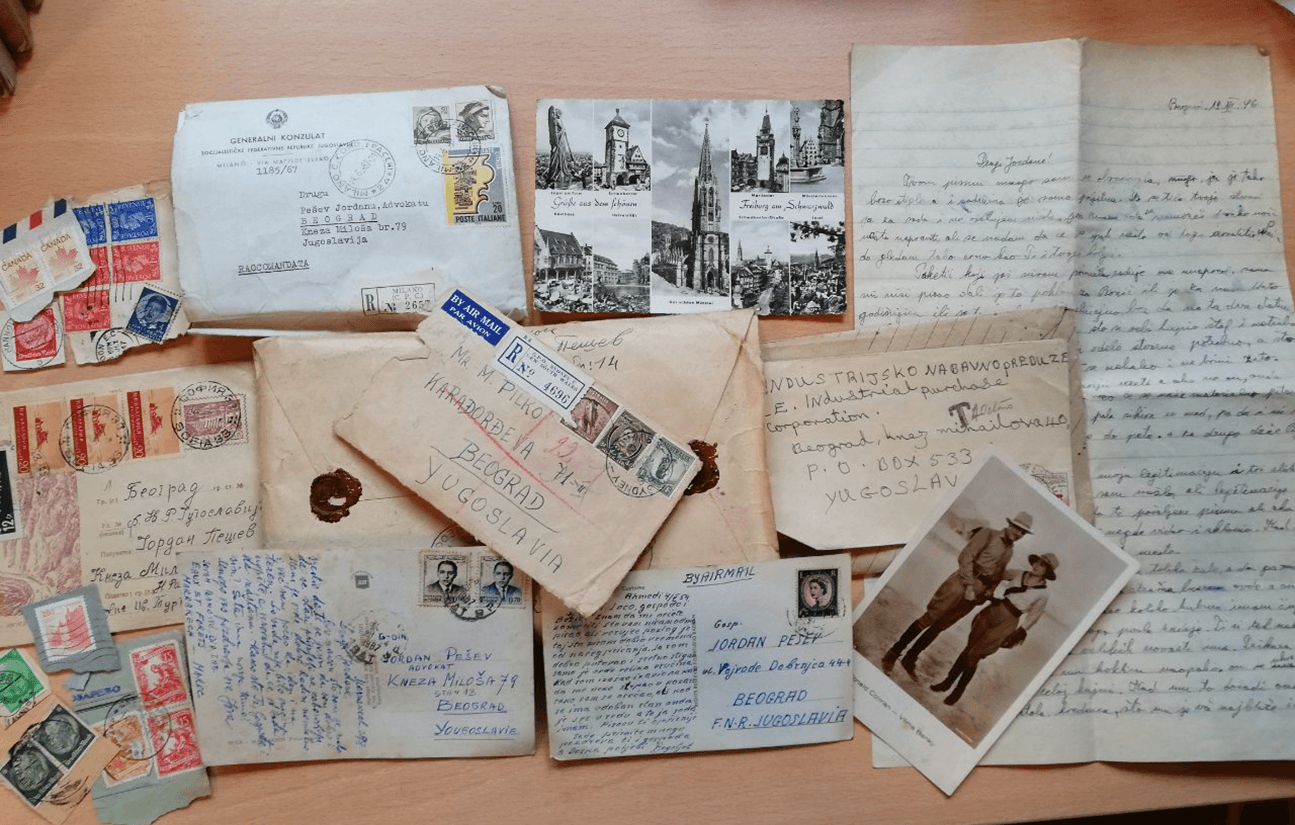
Image: Viktor Lazić. CC BY-SA 4.0. See the image credits.

The old testimonials read like a gift desk. Two Iroshizuku bottles arrived on a Monday, packed as a birthday, ordered on a Sunday. A class act. Gift wrapping was a line item on the site. We took that seriously, because a pen given badly becomes a drawer object and a small estrangement.
This is how to give writing things to Australians who may or may not be in the hobby.
Ask, or give the consumable
If you know the nib, the brand, the paper, you can give the expensive object. If you do not, give the thing that disappears: ink, refills, stamps, a Field Notes three-pack, a bottle of something well-behaved. Consumables say I know you use this. Objects say I have an idea of you. Both can be love. Only one is safe when you are guessing.
A Traveler's cover is a beautiful guess and a size commitment. A refill is a smaller guess. A voucher to a specialist shop is an unromantic success. We would rather sell the voucher than the wrong gold nib.
If you give a fountain pen, give the converter, a pad, and a sentence on a card: here is how you fill it, here is the paper, you may use the cartridge first. Put the care in the box. Do not make them search a forum on Boxing Day.
Match the gift to the climate and the life
Do not give a bottle of ink to someone who only has a white sofa and a curious cat unless you also give a tray. Do not give a leather pouch that will live in a beach bag without the carry notes. Do not give a wet broad to a nurse. Do not give a dated diary in November without checking whether they are a January person; see Australian planners.
For children, a Kakuno or a good felt-tip and a pad they may ruin. For colleagues, a notebook that looks like work and a pen that will not leak in a meeting. For the person who already has everything, a letter. The wax is optional. The letter is not.
Wrapping is part of the product
We charged for wrapping because time is a product. If you wrap at home, use paper that can be reused as a blotter or a drawer liner. Do not bury a fountain pen under a kilo of shredded cellophane. Do not wrap a bottle lying on its side if the cap is the sort that weeps. Pack as if Australia Post were involved even when it is not. The people who wrote to us about birthday ink were writing about packing as much as about ink.
Include a receipt in a sealed envelope if the nib might be wrong. Include permission to exchange. A gift that cannot be exchanged is a dare.
The gift is the use
A pen that gets used is a success even if it was cheap. A notebook that gets finished is a success even if the cover was plain. If you want to be remembered, write in the front: the date, your name, one sentence that does not joke away the affection. Then let them ruin the rest of the pages. That ruin is the point of paper.
We were a shop that sold prestige and also sold a five-dollar wrap. Both belonged. Give the object if you know. Give the consumable if you care. Give the letter either way.
What to write on the card
Write how to fill the pen, where you bought it, and that an exchange is allowed. Write one sentence about why this person, not a joke about their handwriting. If the gift is ink, write the name of a paper that will take it. If the gift is a diary, write that January can start late. The card is the instruction manual the object did not include.
If you cannot say those things without embarrassment, you may be giving the wrong object. Give the letter alone. A letter does not need a converter.
After Christmas, the drawer
Many pens fail in January because nobody showed the recipient the converter and the pad was a glossy gift journal. If you are the recipient, take the pen to a specialist with the box and ask them to ink it. If you are the giver and you see the pen in a drawer in March, offer to go with them. That offer is part of the gift, delayed.
We wrapped enough birthday ink to know that the story people told later was about arrival and packing and a colour they actually used. Aim for that story. A prestige object that never leaves the box is a rumour of generosity, not the thing itself.
Corporate gifts and the branded barrel
A pen with a logo can still write. It often does not, because nobody chose the nib. If you are buying for a staff farewell, spend the extra on a known model and a converter, and put the logo on the card instead. If you must brand the object, brand a notebook they may ruin, not a fountain pen they will fear.
The shop packed enough gifts to know that people remember care. A branded barrel is usually remembered as a branded barrel.
A last rule from the wrapping desk
If you are unsure, give fewer objects and more paper: a letter, a pad, a stamp. The person who needed a pen will tell you. The person who needed to be seen already has the letter. We would rather wrap that than wrap a limited edition that becomes a drawer.
If you are buying in a rush, choose a well-behaved blue, a pad that will take it, and a card that allows an exchange. The wrapping can be simple if the packing is kind. People remember the Monday arrival and the fact that someone thought about paper. They rarely remember the ribbon. Give the letter either way, and let the object be extra.
Questions from the bench
- Is a fountain pen a good gift for someone who does not already write with one?
- Yes, if you include a converter, a simple ink, a pad that will take it, and permission to use a cartridge first. No, if you buy a fragile limited edition and no instructions.
- What if they already have too many notebooks?
- Give ink, refills, stamps, a pouch, or a letter. Do not give another hardback they will be afraid to open.
Further reading
Analog life · 8 April 2025
Handwriting, cursive, and why the hand still matters
Schools argue about joined letters while adults buy fountain pens to remember they have a hand. A practical account of writing as a physical skill in Australia.
Analog life · 14 August 2018
Digital detox, why a notebook still beats an app
The old homepage led with a quality notebook and a slogan. The slogan aged. The notebook did not. A case for analog attention that does not require you to throw the phone in the river.
Analog life · 1 October 2014
Tasting journals, flavour wheels and slow notetaking
In 2014 we unpacked 33 Books from the United States — cigar, beer, wine — and learned that a prompt on a page is a technology. How to steal that idea without the original book.