Inks · 7 November 2024 · 9 min read
Shading, sheen and shimmer without the mess
Three ways ink can be more than a flat colour, and three ways a feed can become a regret. A practical guide for Australian paper and Australian patience.
By The Bookbinders desk
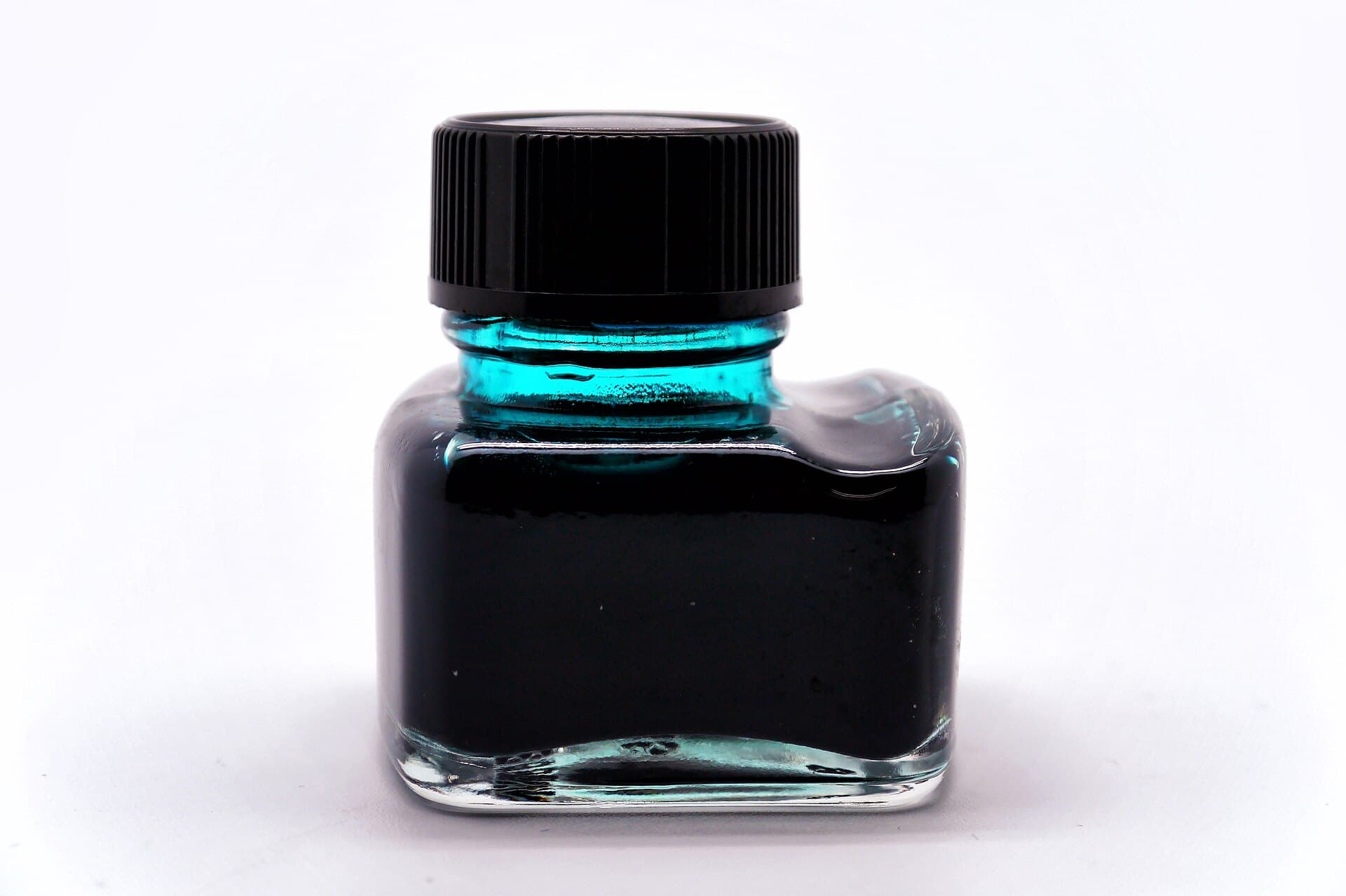
Image: Poulpy. CC BY-SA 3.0. See the image credits.

Ink can be a flat, honest colour. That is a virtue. It can also shade, sheen, or shimmer, which are virtues with conditions. The old shop sold all three eventually, because customers asked after watching videos made in drier rooms on smoother paper. We learned to sell the condition with the bottle.
This is the house distinction, written so you can want a special effect without turning a favourite pen into a rescue project.
Shading: the one we recommend
Shading is what happens when a wet ink pools in the loops of your letters and dries darker in the pool, lighter in the stroke. It is how Iroshizuku looks like water. It wants a nib that lays down enough ink — often a medium or broader — and a paper that does not drink so fast that every stroke is the same. Midori MD will show some. Tomoe River will show more. A cheap pad will show feathering and call it character.
You do not need a special pen. You need pairing and a little slowness. Left-handers may smudge a shading ink that stays wet. Fine nibs will shade less. That is not a failure of the ink.
Sheen: the one we qualify
Sheen is a second colour, often red or gold, that sits on top of a very wet line like a film. It is spectacular in a photograph and modest in a meeting note. It wants extremely smooth paper, a wet nib, and a dry time you may not have in a humid office. It can also be a little greasy to the touch when it is still young on the page.
We did not recommend sheening inks as daily writers for nurses, teachers, or anyone who turns a page with the side of a hand. We recommended them for journals that stay open, title pages, and people who had already fallen in love. If you are buying one because a reviewer used the word " holoshimmerchrome", pause. Buy shading first.
Shimmer: the one we isolate
Shimmer is particles. They are pretty. They settle. They lodge. They will make a clear TWSBI look like a souvenir snow globe and then like a blocked gutter. If you want shimmer, dedicate a pen, preferably a converter pen you can take apart without a ceremony. Shake the bottle as the maker directs. Write more than a title, because particles that sit in the feed without moving will cake.
Do not put shimmer in a vintage sac filler. Do not put it in the only pen you take to a wedding. Do not leave it in the barrel over a long Christmas break in the heat. Flush until you are bored. Then flush again.
Fine nibs and shimmer are a negotiation. Some combinations work. Many skip. Start broader.
Cleaning is the price of admission
Special effects are a cleaning hobby. Dye shading inks are polite. Saturated sheeners may stain converters. Shimmer is a project. If you hate maintenance, you are not a lesser enthusiast. You are someone who should buy a beautiful flat colour and a good pad and go outside.
Keep a cheap pen as a test bay. Keep a sink. Keep the storage rules. The mess is not inevitable. The mess is what happens when a special ink is treated like a cartridge.
Want the page to look like weather? Start with shading. Want the page to look like a trick? Accept the trick's terms. Either way, write something worth the colour. The effect is not the essay.
Photographing the effect without lying to yourself
Phone cameras love sheen and shimmer. Rooms do not always. If you only ever see the ink in a photograph, take the page to the verandah and to the office. If the magic dies, you have learned the truth of the pairing, not the failure of your eyes. Buy the ink for the room you write in.
A swatch is a rectangle. Handwriting is a set of thin and thick strokes. Always write a sentence, not only a swatch, before you commit a bottle to a favourite pen. The sentence is where particles crowd and where shading actually happens.
A sensible cupboard
Keep one shading ink as a daily pleasure, one sheener if you must, and one shimmer in a dedicated cheap pen if you are still curious. That is a cupboard, not a museum. Label the dedicated pen. Flush on a calendar, not on a feeling. If you are bored of maintenance you are allowed to go back to a flat honest blue. That blue will still look like a landscape on the right afternoon.
Teaching someone else without ruining their pen
If you want to show a friend a sheen, use your paper and your pen, not theirs. If you want to show shimmer, use the dedicated cheap pen. The fastest way to make an enemy in this hobby is to leave particles in a borrowed Custom. Take the care notes with you as well as the bottle.
Special effects are hospitality when they are contained. They are a mess when they travel. Contain them, and they stay a pleasure.
A closing note on wanting less
The most useful special effect, after a year, is often the one you stopped buying. Shading remains. Sheen becomes a guest. Shimmer becomes a story you tell about a cheap pen you ruined and then replaced. If that is your path, you have learned the hobby. A flat colour on a good page in Australian light will still be enough, and the feed will thank you.
If you take nothing else from this guide, take the order: shading first, sheen as a guest, shimmer in a pen you can afford to clean on a hot night. Australian humidity will stretch every dry time those videos promised. A blotter, a finer nib, and a cupboard that is not a windowsill will do more for a special effect than another bottle with a louder name. Then write a sentence worth the colour you chose.
Questions from the bench
- What is the difference between shading and sheen?
- Shading is a lighter and darker version of the same colour as the ink pools. Sheen is a second colour that appears as a reflective film, usually on very smooth paper with a wet line.
- Can I put shimmer ink in any fountain pen?
- You can, and you may regret it. Use a pen you can clean thoroughly, preferably a converter, and flush it sooner than you want to. Avoid fine nibs if the particles crowd the slit.
Further reading
Inks · 16 October 2024
Pairing ink and paper in Australian conditions
A colour is not a colour until it dries on the page you actually use, in the humidity you actually have. Here is a pairing method that does not require a laboratory.
Inks · 5 September 2024
How to store and travel with bottled ink
A bottle is happier in a dark cupboard than on a sunny desk. Here is how to keep ink alive through an Australian summer, a suitcase, and the last centimetre in the glass.

Inks · 17 July 2014
Iroshizuku, Japanese landscapes on the page
The bottles we waited on in 2014 were named for weather and water. They still are. Here is how those colours behave on Australian paper, and why the cone in the base is not a gimmick.